

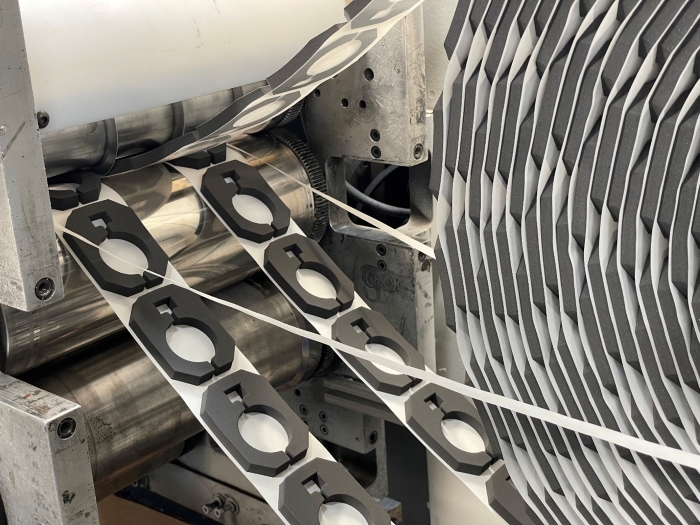
JBC Technologies boasts extensive experience in helping clients across diverse industries bring their die-cut projects to life. From gaskets and seals to heat shields and bonding tapes, the company understands the importance of designing parts for efficiency and cost-effectiveness. Here are 8 factors to consider when designing your next die-cut part:
1. Material Selection: Matching Material to Application
The chosen material plays a crucial role in the success of a die-cut part. Considerations include the substrate the part will adhere to and the environmental conditions it will encounter. Adhesives are particularly sensitive - surface energy and application methods significantly impact performance. JBC Technologies offers resources on pressure-sensitive adhesive failures and bonding low surface energy materials for further exploration.
It's important to remember that multiple material options often exist. Consulting with a converter allows clients to leverage their expertise and network of suppliers to find the most suitable and cost-effective choice. Additionally, exploring new options is encouraged - material science is constantly evolving, offering better and more affordable alternatives.
2. Design for Manufacturability: Working with Your Converter
The concept of "design" doesn't always equate to "manufacturability." Involving a converter early in the process allows for valuable suggestions that can improve production efficiency and reduce costs.
Here are some tips to keep in mind:
• Sharp Corners vs. Rounded Edges: Parts with square corners are generally cheaper to produce. If rounded edges aren't crucial, consider using a square design.
• Internal Cutouts: Maintain a minimum distance of 3mm (or more depending on material thickness) between internal cutouts and the perimeter or other features.
• Tolerances for Multi-Layered Parts: When designing multi-layered parts, factor in tolerance stack-up for proper assembly.
3. Understanding Die-Cutting Tolerances
Several elements influence die-cutting tolerances, including part size, shape, internal features, production method, and material type. Flexible materials, for example, react differently to the die-cutting process compared to rigid materials like plastics. Some materials might stretch or compress, and environmental factors like temperature and humidity can also cause dimensional changes.
Here's what to remember:
• Tolerances depend on part size, materials used, and the number of internal features.
• Larger and thicker parts typically require more generous tolerances.
• Tighter tolerances often necessitate specialized tooling and slower production speeds, leading to higher costs. Sometimes, minor design adjustments can significantly reduce manufacturing expenses.
4. Part Presentation: Considering Your Workflow
Die-cut parts can be delivered in various forms, such as on rolls, with pull tabs, kiss-cut, or with slugs removed. While it might seem insignificant, the part presentation can significantly impact workflow efficiency.
As highlighted in a case study, many clients prefer parts delivered on rolls with waste removed for a smoother production process. Similarly, pull tabs are often requested for easier liner removal on acrylic foam tapes.
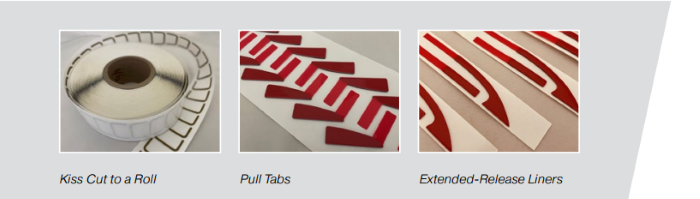
Here's a tip: Discuss your application method with a technical sales representative to ensure the part presentation aligns with your specific needs.
5. Prototyping: Identifying Design Flaws Early
Thorough testing and prototyping are crucial to ensure die-cut parts meet performance requirements before mass production. This helps identify and address any design flaws early in the process. JBC Technologies offers multiple methods for creating prototype parts without expensive tooling, utilizing their digital cutting capabilities.
6. Design for Automation: Streamlining Your Workflow
Once a converter understands that the parts will be processed via automation, several steps can be taken to optimize the workflow. For instance, using a polyester liner instead of a paper liner eliminates concerns about tearing during automated processes. Additionally, incorporating a visual or inline inspection process can be implemented to remove misaligned or misoriented parts.
There are other considerations that require a more in-depth discussion for optimal results. For example, if camera-based visual part detection is part of the process, the similarity between the die-cut material color and the substrate color needs to be taken into account. A black foam gasket on black ABS plastic might be difficult for cameras to identify, and a different material choice might be recommended.
For even more design for die-cut manufacturability tips, contact JBC Technologies directly. Their experience is vast, and collaborating early in the design phase can significantly benefit your project. JBC Technologies has a proven track record of creating custom die-cut solutions across various industries for over 35 years. They are a valuable resource to optimize your design and streamline the manufacturing process.
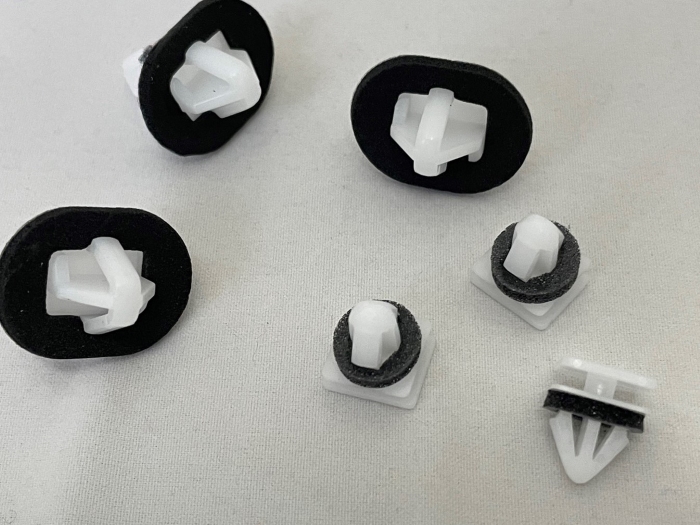
Did you know? JBC Technologies can shorten your supply chain by taking on some of the automated assembly work. Need a die-cut acrylic foam tape added to a plastic clip? Or a foam washer applied to an injection molded part? Just ask!
