

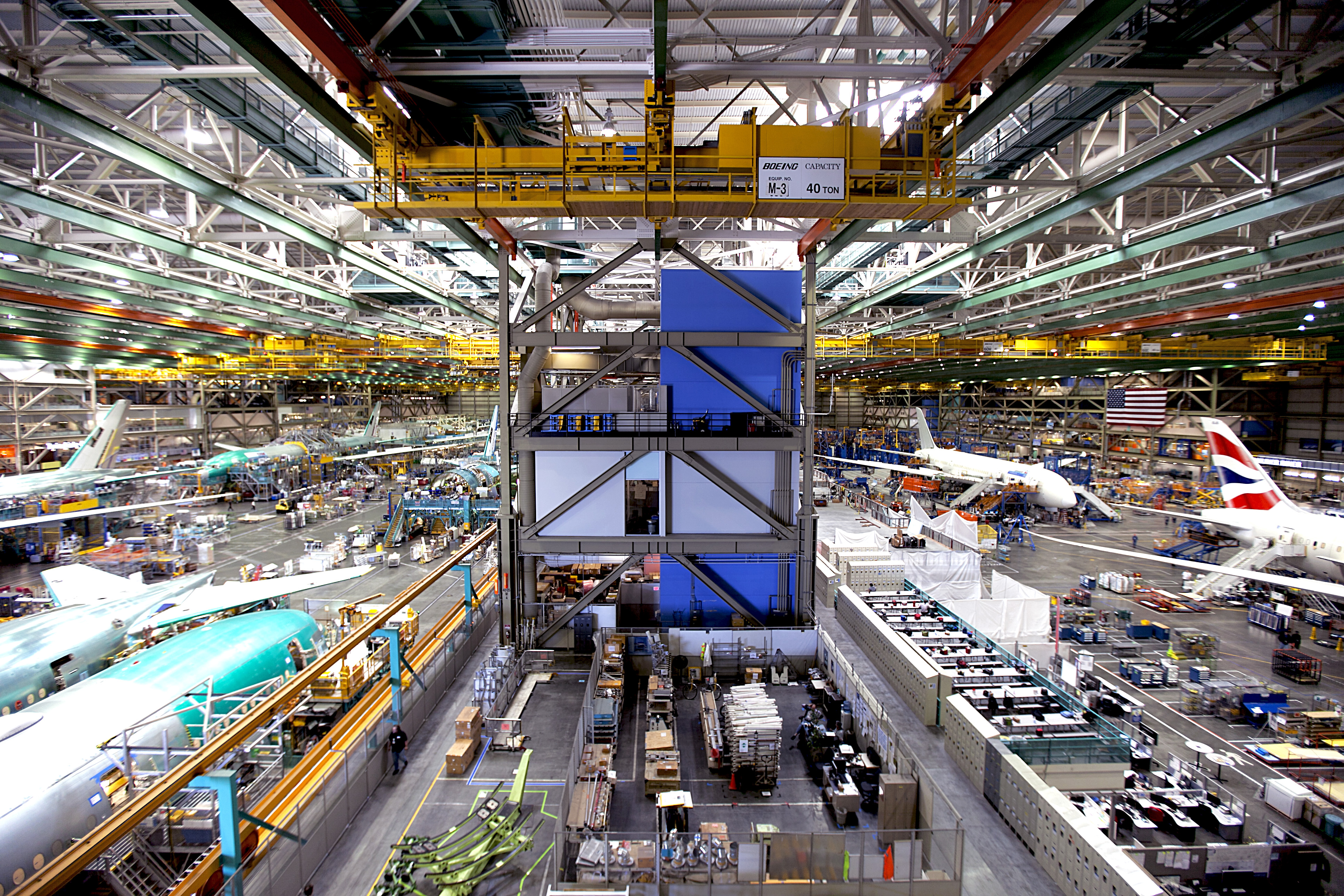
 According to new data collected by MNI, researcher and compiler of the U.S. manufacturing data that powers IndustryNet, manufacturing employment in Washington State stalled in the past year, edging down by 400 jobs or about a half percent between April 2017 and April 2018.
This follows Washington State's impressive manufacturing recovery in the years following the recession, in which the state added nearly 20,000 or 7%, surpassing its pre-recession employment in 2015.
This article will take a closer look at Washington State's industrial sector, delving into specific industry, city, and regional factors. We'll examine the state's outlook in light of recent changes such as tax reform and import tariffs, and examine its post-recession growth in detail.
Washington State manufacturing: the year in review
Washington manufacturers lost 439 jobs between April 2017 and April 2018, a half percent loss.
Losses were led by a 6.8% decline in transportation equipment employment, which remains the state's largest industrial sector for number of manufacturing jobs, employing 53,194.
Additional losses were seen in printing/publishing; paper products; fabricated metals and lumber/wood.
These losses were offset, however, by gains in a handful of other sectors, including rubber/plastics; electronics; textiles/apparel and industrial machinery.
Taking a look at regional data, IndustryNet shows Washington State's manufacturing job losses were mostly limited to the state's northern regions, with employment down 2.8% in Northeast Washington, and down 1% in the Northwest region.
Employment in Southeast Washington, however, spiked 9.3% and rose 1% in Southwest Washington.
Many of Washington's top cities for manufacturing employment saw job losses over the year, including Seattle (-2.1%); Everett (-7%) and Kent (-2.8%), offset by minor gains in Vancouver and Redmond.
Over the year, the state added some major new manufacturers, including SGL Automotive Carbon Fibers, which opened a new facility in Moses Lake and ultrasonic cleaning products maker Omegasonics, which set up shop in Ferndale. However, Washington continues to be plagued by layoffs at Boeing and related suppliers..jpg)
Washington's 6,506 industrial companies currently employ 313,262 workers, several thousand more than the 297,000 workers employed in the state a decade ago.
Washington State was one of the first states to reclaim its industrial sector following the devastating job losses during the recession, even surpassing its pre-recession employment levels.
Looking ahead: Tariffs loom large for Washington State manufacturing
Intensifying trade disputes with China, including the import tariffs on steel and aluminum enacted in 2018 could deliver a one-two punch to Washington State's industrial climate as industries that rely on imported steel and aluminum face higher prices, with Washington's aviation industry sure to feel the impact.
Washington State is among the nation's most trade-dependent states. There are currently 161,680 Washington State workers employed by companies that rely on imported steel and aluminum, according to a study by MarketWatch. The state's all-important aerospace industry relies heavily on imported materials. Among the products subject to Chinese import tariffs are parts for internal combustion aircraft engines and aircraft gas turbines.
Washington manufacturers outside the transportation equipment industry are also being impacted by ongoing trade issues. REC Silicon in Moses Lake, for instance, which produces materials for solar equipment recently laid off 100 employees, citing the solar trade dispute with China.
In addition, concerns are mounting over retaliatory tariff measures currently taking shape in China and Europe, with China recently announcing tariffs on $34 billion of U.S. goods. Washington relies heavily on exports, and China is the state's top export market, accounting for about 19% of the state's exports. One third of all Washington manufacturers distribute their products internationally, according to IndustrySelect.
Currently, China tariffs are mostly targeting agricultural products, but the list also includes some steel and aluminum products.
On the other hand, U.S. steel producers stand to benefit. 1,919 industrial workers in Washington are directly employed by steel and aluminum industries, according to MarketWatch.
Despite the many challenges manufacturers face today, the U.S. industrial sector continues to expand at a steady clip. For a number of reasons, Washington remains a top destination for industrial businesses to get established. Next, we'll take a look at some of the specific site-selection factors that makes Washington a great place to do business.
Why Washington is a top location for manufacturing
Washington State was recently named America's top state for business by CNBC. Among other factors, were the state's heavy focus on tech and innovation as well as a highly-skilled workforce.
These factors have had a positive impact on the state's manufacturing sector, particularly in its aerospace industry. Washington State's location is ideal for exporting to Asia, and its exports have skyrocketed since 2010, according to the National Association of Manufacturers.
 A top concern among many U.S. manufacturing companies remains the "skills gap" with many factories struggling to find workers with the right skills. A recent survey by the Institute of Supply Management shows many manufacturers are running up against a labor shortage -- especially skilled labor.
These shortages have put a drag on U.S. industrial production, even as new orders continue to rise. States with a surplus of skilled labor have a significant competitive edge over those that do not.
Washington State boasts one of the best workforces in the nation, ranking 5th among U.S. states for the quality of its workforce, and 3rd for its focus on technology.
The state is home to 34 community and technical colleges, which feed into various industries across the state, while 90% of Washington residents are high school graduates (34% college graduates). The state also is home to one of 10 Department of Energy laboratories in the U.S.
Innovative programs like Puget Sound's Year Up program, which prepares students for careers in high-tech manufacturing, and other fields, have helped boost the state's workforce.
Washington ranks high on a number of other site selection factors, including an abundance of capital and highly competitive business incentives. Its Business and Occupations tax operates in lieu of a corporate income tax, and allows a number of credits for small businesses and technology companies.
The recent proposal in Seattle of a significant "head tax" or employment tax, however, could put a dent in the state's business-friendly reputation.
In conclusion, Washington's educated workforce and focus on technology and innovation have helped the state's manufacturers thrive. A number of factors suggest growth will continue in the years ahead, as the importance of skilled labor becomes paramount.
Challenges remain for manufacturers that rely on imported raw materials, and concern is growing over retaliatory trade measures that affect Washington State's exports.
Next, we'll take a look at the rise of Washington State's manufacturing sector in the years following the recession, based on developments tracked by IndustryNet.
Washington State's manufacturing recovery
A decade ago, Washington State was home to 6,873 manufacturers employing 297,352. The state lost thousands of manufacturing jobs during the recession, and by April 2011, the state's industrial workforce shrank to 293,724.
The state's loss was minor compared to other large manufacturing states, particularly in the Midwest. By comparison, Pennsylvania lost and Ohio
By 2011, however, the worst of the downturn was over, and Washington State manufacturers began to add jobs again. Today, the state accounts for more jobs than it did prior to the recession, a milestone few states have achieved.
2011-2012
In April 2011, IndustryNet reported its first manufacturing employment gain for Washington State since before the recession. In this year, the state's industrial employment edged up 1% or by 2,300 jobs.
Gains were led by the food processing sector, which surged by 5%, ranking 2nd in the state for number of industrial jobs.
Other notable gains were seen in industrial machinery; electronics; and chemical processing.
The state's paper products industry continued on the decline, plunging 11% in this year, following the closure of Everett's Kimberly-Clark plant and Grays Harbor Paper in Hoquiam.
In this year, we saw the opening of Achilles USA's plastic film production facility in Everett; and the planned expansion of aerospace facilities Umbra Cuscinetti and Tect Aerospace, both in Everett.
Industrial employment in Seattle rose over the year, up nearly 5%, and we also saw significant gains in Redmond and Kent.
2012-2013
Washington State added double the number of manufacturing jobs in this year, with the state adding 6,600 jobs or 2.2%.
The transportation equipment sector, which accounts for the most industrial employment in the state, grew by 3% in this year. Employment in food processing continued to grow, as did jobs in fabricated metals; electronics; and instruments/related products.
Manufacturing production in Washington was partially boosted by increased demand from Airbus and Boeing, with expansions planned at aircraft suppliers Vaupell, Inc; Umbra Cuscinetti; and Orion Industries.
In addition, BMW and Europe-based SGL Group formed a joint venture to open an automotive carbon fibers plant in Moses Lake; Japanese company Zen-Noh-Hay expanded its hay cubing facility in Port of Pasco; Amway opened a new botanical concentrate manufacturing plant in Quincy; and plastic-wrap maker Paragon Films�announced it would break ground on a new facility in Union Gap.
Industrial jobs declined slightly in Seattle, but surged in both Kent and Spokane.
2013-2014
Washington manufacturers added more than 7,000 jobs in this year in its third straight year of gains.
Once again, transportation equipment led the state's gains, up 4% in this year. Jobs in food processing were up 2%, while rubber/plastics surged 10%. We also saw gains in fabricated metals; electronics; lumber/wood; and furniture. Sectors like paper products and printing/publishing continued to suffer losses.
Several manufacturing companies in Washington announced expansions, including Darigold's plant in Sunnyside; SGL Automotive Carbon Fibers in Moses Lake; and aerospace supplier Carbures, LLC in South King County. In addition, Pacifica Engineering announced plans to establish a new factory in Everett (later purchased by Spanish aerospace company MTorres).
Jobs surged in Seattle, up about 6% in this year.
2014-2015
In its fourth straight year of gains, Washington State added roughly 2,800 jobs, or 1%, about half the number of jobs the state had added in previous survey years.
Job gains were led by the transportation equipment sector, which climbed 2.4% over the year, amounting to a 9.2% increase over four years. This was the year Boeing announced the development of a new 777X composite wing facility in Everett, slated to begin production in 2017, and BMW announced a $100 million expansion of its carbon-fiber plant in Moses Lake.
A number of innovative ventures were unveiled that year. SpaceX announced plans to build a satellite development and manufacturing facility in Seattle for its global satellite project, and the passage of "Initiative 502" prompted the establishment of several cannabis processing plants and growing facilities such as Monkey Grass Farms and DB3 Inc's marijuana edibles plant in Seattle.
Industrial jobs in Seattle rose 3% in this year, while Vancouver and Kent both saw gains.
2015-2016
In this year, Washington industrial employment growth stalled, with the state adding less than 1,000 jobs, as layoffs at Boeing hit the state's all-important aviation industry.
Food processing also shed job, down nearly 4%. Primary metals; chemicals; and electronics also posted a loss. These were offset, however, by strong gains in rubber/plastics; fabricated metals; and stone/clay/glass.
New plant announcements were fewer in this year and included Greenfab's sustainable new prefab housing facility, and the establishment of Cannon Fish Co.'s fish processing plant in Kent.
Jobs were mostly down across Washington State's top industrial cities, except for Kent, which grew by 1.3%.
2016-2017
Washington State recouped some of its lost momentum in this year, adding nearly 1,200 jobs in its sixth straight year of gains. The transportation equipment sector saw little change in employment, while a number of sector saw minor improvements, including food processing; industrial machinery and rubber/plastics.
Next, we'll take a closer look at Washington State's manufacturing sector, exploring its major industrial cities and regions, as well as its top companies.
Washington manufacturing by the numbers
Top Washington State Manufacturing Sectors by Employment:
18% Transportation equipment
16% Food and kindred products
12% Industrial machinery and equipment
7% Lumber and wood products
7% Electronic and other electric equipment
Largest Washington State Industrial Companies by Employees:
Microsoft Corp. (Redmond) - 26,200
Boeing Commercial Airplane Co. (Everett) - 18,560
Boeing Co., The (Kent) - 4,928
Washington Counties with the Most Manufacturing Jobs:
King - 149,767
Snohomish - 42,318
Pierce - 22,756
Spokane - 22,627
Clark - 16,835
Washington State Cities with the Most Manufacturing Jobs:
Seattle - 48,535
Redmond - 36,518
Everett - 27,907
Kent - 22,032
Spokane - 15,530
About this data:
MNI's team of more than 80 researchers scours hundreds of sources on-and-offline to zero in on every manufacturer in the U.S. Each manufacturer is contacted multiple times annually to ensure its information remains up-to-date and complete. Our state-by-state industrial employment surveys are based on this data, allowing us to compare jobs counts in a given industry, state, region or city from year to year.
For more information on Washington State manufacturing companies
To access detailed profiles of Washington�s 6,700 industrial companies and their 20,000 executives, learn more about MNI's IndustrySelect database subscription.
Or, to connect with industrial suppliers in Washington State and across the U.S. start your free search on IndustryNet. IndustryNet allows users to search and source more than ten thousand types of products, parts, supplies, and services for free. IndustryNet lists every U.S. manufacturer plus thousands of wholesalers & distributors and industrial service providers.
