

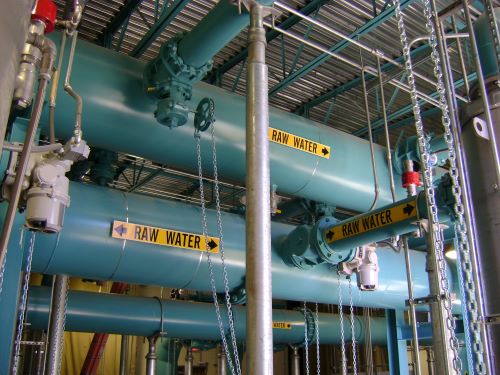
Industrial processes across the globe require pumps to operate reliably and efficiently.
By minimizing the effects of corrosion and erosion, users can enhance productivity and reduce running costs.
Careful consideration of available options during the specification and purchasing phase can mean the difference between a lifetime of smooth operation versus endless outages, breakdowns, lost production, frustrated production managers and overworked maintenance teams.
What Challenges Do We Face When Pumping Corrosive and Abrasive Materials?
When purchasing pumps for any of your applications that are abrasive, an astute buyer has to manage multiple factors the most important being:
Operating Costs. In harsh pumping environments, how the pump selected is planned on being operated will determine both the life of the pump and how much it costs to run.
Running a pump at higher up its operating curve will reduce operating costs however it will also increase wear and tear on even the best engineered pumps.
When pumping abrasives, here needs to be serious examination of oversized pump options and running them slower to meet your output specifications.
In many cases when a given pump yields 1,000 hours of life and you reduce the speed to half the original, the pump life will increase to 4,000 hours.
Operating costs often equate to between 40 and 60% of the total cost of ownership of a pump. In the world of corrosives and abrasives it can be tempting to choose a pump less suitable for the task just to save on the purchase price.
Managing Downtime AND Preventing Breakdowns. By their very nature abrasive and corrosive materials both wear on pumps far more than other materials.
This means that pumps need to be able to withstand the additional wear and tear that they will encounter and at the same time we also need those pumps to be easy to repair if they do break down.
When pumping corrosive and abrasive materials, trying to save money on the initial investment can often come back to haunt a ‘price shopper’ with increased downtime, lost product and higher maintenance costs as parts wear out faster, performance degrades faster causing lost production and higher parts costs.
Solids Handling Ability. Not all hard metal pumps actually have the same solids handling capability. Some pump brands claim to be able to handle solids, but they can only handle concentrations of solids as high as 5% while some slurries can be up to 70% solids.
Make sure that any pump selected is rated to handle the level of solids in the material. This can be a key cause of performance issues when pumping abrasive materials.
Corrosion Resistance. Pumping a corrosive material resistance is determined by the construction materials corrosion resistance to the material being pumped and the temperature of the pumped material.
Corrosives can often be less corrosive at a lower temperature, which means if there is a way to lower the temperature of the material through a smarter design, it can extend the life of the pump while helping to keep down maintenance costs and lost production caused by breakdowns.
Choosing the Right Pumps for Your Corrosive And Abrasive Applications
There will be a temptation to not use a speciality pump for your abrasive and corrosive applications in order to save money –however the more frequent replacements, lost production due to breakdowns and additional maintenance costs almost always outweigh the savings from the lower purchase price.
Pye-Barker can offer a range of pumps for abrasive applications including Nagle Pumps who use their 50 years of field experience to engineer and construct hard metal pumps to provide excellent efficiency over a long service life even while pumping the most corrosive or abrasive of materials.
Nagle pumps offer the following advantages over other pumps specifically for abrasive and corrosive applications.
Efficient Designs. Nagle’s designs can be characterised as simplistic, but in doing so they have a pump that is easier to maintain and repair in place than more complicated designs and their designs mean these pumps are much less likely to leak than their competitors.
For example, the flange mounted bearing cartridge can be removed from the mounting frame without disturbing the basing or base – this makes maintenance faster and reduces the footprint of the pump at the same time.
The clamp ring wet end permits quick access to the impeller and the casing for easy inspection, maintenance and clean out.
Designed to handle the harshest materials. Nagle’s impellers are designed for pumping slurries effectively. The heavier/thicker walled casings and thicker shafts increase their durability especially when coupled with the right construction material for the application.
This results in a much longer service life which pays off over the life of the pump with lower maintenance costs and less frequent repairs.
Applications for Nagle’s Hard Metal Pumps.
Power
• Ash Removal
• Ash Sluice
• Coal handling
• Coal Pile Runoff
• Pond Return Water
• Scrubber Water
Steel
• Scale Removal
• Slag Quench
• Coal or Coke Slurry
Petroleum
• Coke Breeze
• Filter Feed
Mining
• Heavy Media
• Crusher Wash
• Tailings Removal
Sand & Gravel
• Dredging
• Dewatering
• Wash/Prep
High Temperature
• Molten Salts
• Ammonium Nitrate
• Molten Sulphur
• Molten Leads
Chemical
• Corrosive chemicals
• Ammonium Nitrate
• Waste Disposal
• Metal Processing
Key Features of Nagle Pumps.
• Progressive casting wall thickness for maximum service life
• Single volute, single discharge to allow maximum solids passage which eliminates the need for hydraulic balancing, allowing dry running.
• Cantilever pump has no bearings, bushings, seals or rubbing parts below the mounting plate.
• Thru-bolt construction below the mounting plate provides easy maintenance.
• Impeller wear adjustment is located above the sump cover on all Vertical models and are easily accessible on Horizontal models.
• On Vertical models, open bypass design feature will tolerate pump shut-off.
• All mated components piloted (register-fit) to ensure concentricity and aid in reassembly of the pump.
• Drive options include direct, v-belt, right angle and variable frequency.
• Nagel Pumps offer a wide variety of construction materials many not available from other pump manufactures including
- Carbon Steel
- 28% Hardened Chrome
- 316 St. Steel
- Alloy 20
- Hastelloy
What to Look for When Assessing A Pump Systems Provider
Based on 150 years of engineering experience at Pye-Barker, here are some of the top considerations for selecting a pump systems provider – they should help you evaluate your vendor and get you the best possible results:
1. Who is going to be designing the system for us?
2. How much experience do they have designing similar systems?
3. What will my projected total cost of ownership be?
4. Can it be made better?
5. In situations where space is at a premium: Is the system occupying the smallest footprint possible?
6. Who is going to be building this system for us?
7. How much experience do they have building, testing and commissioning systems like this?
8. What are our costs if the project is delayed?
9. What is the cost of lost production if the project is delayed?
10. Who is going to look do the maintenance in the long term?
11. Who is responsible for the system long term?
About Pye-Baker’s Pumps Consulting, Supplying and Installation
Pye-Barker can advise you on the design, specification, provide all the parts for your pump, install, and maintain them for you. With 150 years of positive displacement engineering experience. There is not an application we have not had direct experience with already and worked out how to make it work for our clients.
Offering a comprehensive range of both centrifugal and positive displacement pumps in a variety of construction materials Pye-Barker can find a pump that will pump even the most corrosive or abrasive materials without frequent outages or requiring continual maintenance.
Pye Barker specializes in managing the entire process of designing, building and repairing pump systems so that their clients never have to worry about them during any part of their lifecycle.
All Pye-Barker designs that are built and installed by Pye-Barker are guaranteed to get the specified performance, otherwise Pye-Barker will guarantee to keep working with you until your pump system works as specified even if it means installing a whole new pump.

What to Do Next
If you are planning to build, upgrade or add a pump system, the first step to getting the right performance is a no-cost, no-obligation “Design Needs Assessment.”
To schedule your “Design Needs Assessment” call 404-363-6000, or send an email to sales@pyebarker.com or go to https://pyebarker.com/contact/#quote
This post was brought to you by Pye-Barker Engineered Solutions in partnership with IndustryNet.
Have industry knowledge like this to share? IndustryNet can help you reach the right audience. Learn about our marketing solutions.
