

3D printing, also known as additive manufacturing, has evolved significantly since its inception in the 1980s. It all began in 1983 when Chuck Hull developed stereolithography (SLA), which used UV lasers to create solid objects layer by layer. Soon after, Scott Crump introduced fused deposition modeling (FDM) in 1988, further advancing the technology by extruding heated plastic into layers. Other innovations like selective laser sintering (SLS) emerged in the 1990s, allowing for the use of metals and other materials.
Since then, 3D printing has grown into a transformative force across industries like healthcare, automotive, and aerospace, offering rapid prototyping, reduced costs, and more complex designs than ever before.
From high-performance polymer printing for aerospace and medical applications to innovations in metal 3D printing for scalable production, the technology is fast transitioning from prototyping to mainstream industrial use. Multi-material printing is creating complex, functional parts, while 4D printing introduces smart materials that can adapt to environmental changes. Meanwhile, the push toward sustainability is driving the adoption of biodegradable and recycled materials in 3D printing. These breakthroughs are not just enhancing production efficiency but also opening up entirely new possibilities for on-demand and distributed manufacturing, enabling a more agile and sustainable future for industries.
In this post, we’re taking a closer look at the latest 3D printing developments and their impact on sectors like aerospace, automotive, and healthcare.
The Six Hottest Trends in 3D Printing
1. High-Performance Polymer Printing
Recent advancements in 3D printing have introduced the use of high-performance polymers like PEEK (Polyether Ether Ketone) and ULTEM (Polyetherimide). These polymers have superior thermal resistance, chemical resistance, and mechanical properties compared to conventional materials like ABS or PLA.
PEEK is used in demanding applications such as aerospace, medical implants, and automotive components due to its strength, light weight, and ability to withstand extreme environments. For example, 3D-printed PEEK parts are being used in orthopedic implants because of their biocompatibility, offering an alternative to metal implants.
ULTEM is being increasingly used for parts in aircraft interiors due to its flame retardant properties and high-temperature resistance. 3D printing with ULTEM allows for the production of lightweight components, helping reduce overall aircraft weight and fuel consumption.
This development pushes the boundaries of traditional 3D printing materials and enables production in industries where high-performance characteristics are crucial.

Reach 10,000 tech-forward companies and 26,000+ executives with the Manufacturers in Emerging Industries Industrial Database, only from MNI.
2. Metal 3D Printing at Scale
Metal 3D printing is becoming more viable for mass production as innovations like binder jetting and directed energy deposition (DED) improve scalability. Binder jetting allows metal parts to be printed layer by layer using a powdered material and a binding agent, followed by sintering to harden the final product. Directed energy deposition (DED), on the other hand, involves fusing metal powder or wire with a laser or electron beam as it’s deposited, allowing for repairs or manufacturing of complex metal components.
Wondering how this might look in the real world? Take, for instance, GE Aviation, which uses metal 3D printing to manufacture fuel nozzles for its LEAP jet engines. The company replaced traditional multi-part assemblies with single, 3D-printed nozzles that are 25% lighter and five times more durable.
This technology enables the production of high-quality, complex metal parts more efficiently and cost-effectively than traditional manufacturing methods.
3. Multi-Material Printing
Multi-material 3D printing is expanding the range of functionalities by allowing different materials to be printed in a single process. This technology is particularly useful for creating components that require varied mechanical properties, such as combining rigid and flexible elements in one part.
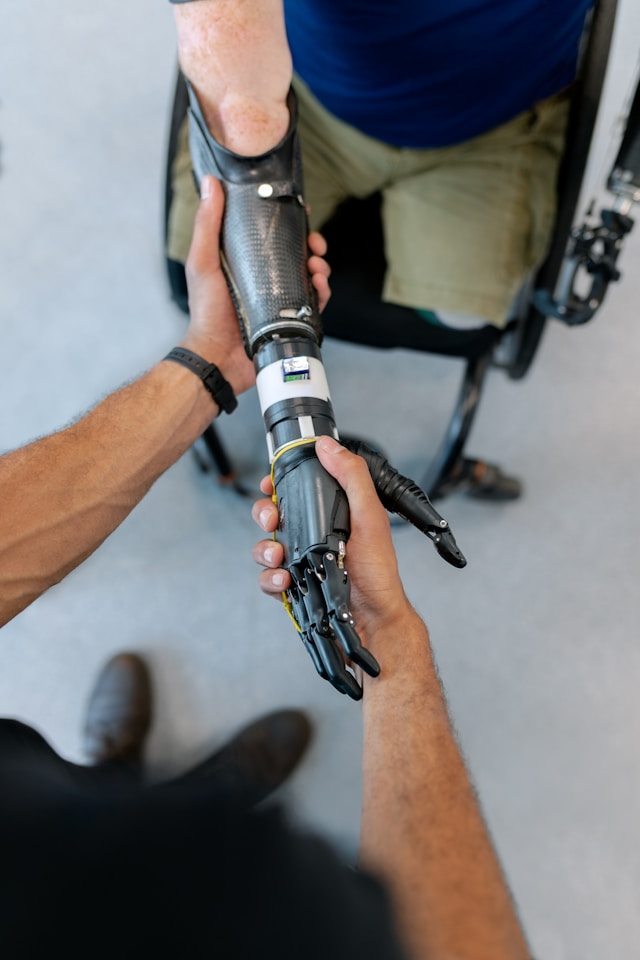
One practical application of this technology is in the creation of prosthetics. Using multi-material 3D printing, prosthetic limbs can be made with softer, flexible areas where comfort is key (such as near joints) and more rigid sections where support and strength are needed.
Another example is the use of multi-material 3D printing to produce wearable electronics, where different material properties—such as conductive and non-conductive materials—are needed to create complex circuit designs.
By merging different materials in one go, manufacturers can create more sophisticated products that offer both durability and flexibility.
4. 4D Printing
Truly the technology of the future, 4D printing builds on 3D printing technology but incorporates materials that can change shape or properties over time, in response to environmental stimuli like temperature, moisture, or light. While it might sound like science fiction, this programmable material technology holds significant potential in various industries, especially where adaptability is essential.
Among the top applications for this technology, the aerospace industry is currently exploring 4D printing for self-assembling components or adaptive structures that can change shape during flight to optimize aerodynamics.
Meanwhile, 4D printing holds great potential in the medical industry, where researchers are developing 4D-printed implants that can morph once inside the body, minimizing the need for invasive surgeries.
These innovations allow manufacturers to create dynamic products capable of adjusting to environmental conditions, offering new possibilities for design and functionality.
5. Sustainable and Biodegradable Materials
With the growing focus on sustainability, there’s increasing interest in using biodegradable and eco-friendly materials in 3D printing. Manufacturers are exploring plant-based polymers and recycled materials as alternatives to traditional plastic filaments, reducing the environmental footprint of production.
For instance, some companies are developing bio-based filaments derived from corn starch or algae, which break down naturally after use, reducing plastic waste. Additionally, materials like recycled PET (rPET) are being used to create new products from recycled plastic waste, such as water bottles.Wood-based filaments made from sawdust or wood fibers mixed with PLA are also gaining popularity, providing a more natural aesthetic while maintaining the strength and flexibility of traditional 3D printing materials.
These advancements in sustainable 3D printing materials support the global push for environmentally responsible manufacturing processes.
6. On-Demand and Distributed Manufacturing
As 3D printing technology becomes faster and more versatile, it is enabling on-demand and distributed manufacturing, where products are produced closer to the point of need. Prior to its closure in 2022, U.S.-based automotive company Local Motors dazzled attendees at the 2014 International Manufacturing Technology Show in Chicago by 3D printing an entire vehicle, the Strati, live on the showroom floor. In stark contrast to traditional cars, which are made up of around 30,000 parts, the Strati consisted of just 50 components.
This type of approach to decentralized production allows companies to create vehicles tailored to regional needs while minimizing production waste. By reducing reliance on centralized manufacturing hubs, businesses can lower shipping costs, cut lead times, and respond more swiftly to market demands. The future of manufacturing could see 3D printing hubs scattered across various locations, producing customized products on demand, making supply chains more agile and responsive.
Summing Up
These developments showcase how 3D printing is maturing into a powerful tool not only for prototyping but also for mass production and innovation across industries like aerospace, automotive, healthcare, and more.
Whether you’re seeking 3D printing in Pennsylvania, machining in Minnesota or adhesives in Alabama, let IndustryNet be your guide. Search, sort and quote for free on America’s most trusted industrial marketplace, listing 365,000+ U.S. providers of industrial supplies, parts, components and services.
