

Inconel® alloys are extremely versatile, with their applications cutting across a wide range of industries thanks to their high performance and outstanding properties. Since they are optimized to withstand extremely demanding conditions, they are commonly used in industries such as automotive, aerospace, marine, and oil and gas. This article will explore what exactly makes Inconel® alloys so special.
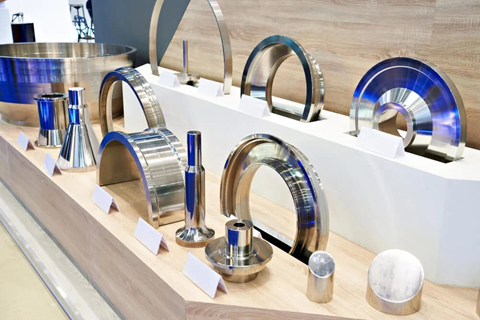
Characteristics and Composition of Inconel® Alloys
Inconel® is known for its extreme corrosion and oxidation resistance, and its ability to withstand elevated temperatures. Not only does it maintain its strength through all of this, but high heat exposure even causes the alloy to form a protective passivating oxide layer on its surface to prevent further damage. Solid solution strengthening and precipitation strengthening, or age hardening is what is responsible for the development of the alloy’s strength. Inconel’s high temperature resistance can add additional heat into the cutting tool which reduces its performance. Incorporating a special heat-resistant insert or coating during machining helps the machine hold up better during the cutting process.
Inconel® alloys vary widely in their composition, however, nickel and chromium are always the primary elements. The following is a list of the different types of Inconel® alloys and their respective compositions:
• INCONEL® 600 is a nickel chromium alloy that’s highly resistant to many corrosive elements. Even in extreme conditions, it won’t succumb to oxidation or stress corrosion cracking caused by chloride ions.
• INCONEL® 601 contains nickel, chromium, and aluminum. The aluminum gives it exceptional mechanical properties even in high heat.
• INCONEL® 625 contains nickel, chromium, molybdenum, and niobium. The reaction between molybdenum and niobium causes the alloy’s matrix microstructure to harden. This increases tensile strength, which makes the alloy extremely resistant to the corrosive elements of harsh conditions.
• INCONEL® 690 is made up of high-chromium and nickel. The use of high-chromium makes this Inconel® variant highly resistant to the corrosive conditions of aqueous environments. This corrosion resistance also allows it to withstand the sulfidation of high heat environments.
• INCONEL® 718 is a unique nickel-based superalloy made from nickel, chromium, molybdenum, niobium, and iron. It also contains trace amounts of aluminum and titanium. These alloying elements make this metal strong, flexible, and resistant to post-weld cracking.

Common Applications for Inconel® Alloys
Numerous advanced industrial applications today—especially those in the aerospace, automotive, and oil and gas industries—rely on alloy materials with exceptional strength and technical performance. Many alloys cannot withstand these conditions, but Inconel® solves this problem.
The aerospace market is full of applications where components such as jet engine parts are constantly exposed to high heat and pressure. Inconel 718 started its life in the aerospace industry and has only become more widespread in that field. Materials must be made to withstand these conditions while maintaining their strength and integrity. Nickel based superalloys offer corrosion resistance, creep-deformation resistance in high-stress environments, and low expansion rates even in elevated temperature conditions.
Automotive applications such as a car engine produce lots of heat, but must still remain efficient, lightweight, and reliable. Inconel® 600, 601, and 625 are used in the construction of critical components in high-performance vehicles for passive safety devices including airbags, fuel pumps, sensors, and exhaust couplings.
Because of its corrosion resistance, especially in sea salt environments, Inconel® 625 has many uses in the marine industry. This includes oil and gas industry needs, such as downhole drilling applications like tieback on undersea lines. Inconel® 625 is also applied in sea water environments for telecommunications lines, propeller blades, and wire ropes.
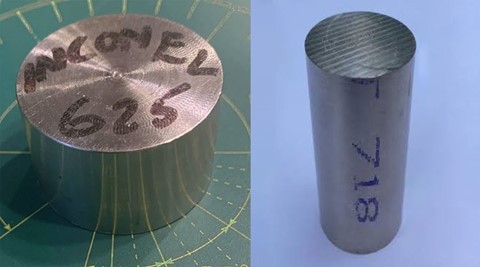
Inconel® 625 vs. Inconel® 718: Battle of the Titans
Of the exceptionally strong alloys that are used in the applications listed above, two of them in the Inconel® family stand out. Inconel® 625 and Inconel® 718 are used in several products that not only require strength, but also high temperature resistance, and strong corrosion resistance. Understanding Inconel 718 and 625’s differences is vital when deciding which one is best for the end use requirements of your manufacturing process.
While Inconel® 625 and Inconel® 718 share many properties of the Inconel® alloy family and of the nickel alloy and stainless steel families in general, they also have discernible distinctions for unique uses.
As stated previously, Inconel® 625 mainly consists of nickel and chromium with additions of molybdenum and niobium, which provide for its high tensile strength and corrosion resistance. Columbium and molybdenum account for its high strength in environments with a cryogenic temperature or high heat. Inconel® 625 maintains its strength in environments up to 2,000° F and provides good oxidation resistance and resistance to carburization.
Inconel® 718 has a similar chemical composition to 625, with slight variations. Inconel® 718 can be precipitation hardened without succumbing to post-weld cracking. It can also resist creep rupture at temperatures up to 1,300° F. Because of this capability, Inconel 718® can maintain high tensile strength while also possessing alloy characteristics like high formability. High weldability makes Inconel® 718 similar in some ways to general stainless steel grades. Inconel® 625 in annealed condition, on the other hand, can be significantly stronger and, as mentioned, particularly suited to resisting corrosion, including that caused by sea water environments.
The high nickel concentration in both Inconel® 625 and 718 leads to higher levels of formability. Both alloys have outstanding tensile strength and can be stamped and cold formed. Inconel® 718’s resistance to post-weld, or strain-age, cracking during heat treatment makes it especially suited to formability while retaining high strength in the annealed condition.
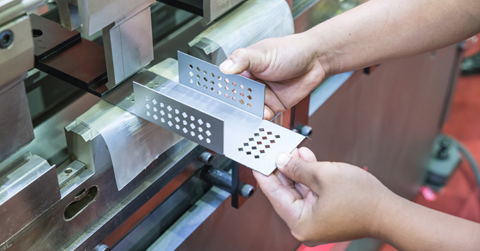
The shaping qualities of these Inconel® alloys allow the material to be rolled through a wire mill to produce various wire profiles for several industries. They can be used to make honeycombs, seal rings, bellows, and springs, and they also serve as high performance fastener alloys for extreme conditions, including those where corrosion frequently occurs. Other product forms besides shaped wire include strip and ribbon, as well as round, flat, and square wire. Notably, neither of these alloy types are commonly deep drawn.
Understanding how these Inconel® alloys respond to various operations like stamping, deep draw, roll forming, and micro-laser welding is key. Even the most skilled buyers of alloys and most experienced mechanical engineers can benefit from the expertise of metallurgists who understand the properties and uses of alloys inside out. The team at Ulbrich Stainless Steel has the knowledge to help customers procure the alloys that work best for their end use needs. To learn more about how Inconel® alloys can be used in your next precision application, contact an Ulbrich specialist today at www.ulbrich.com!
