

4 MIN. READ
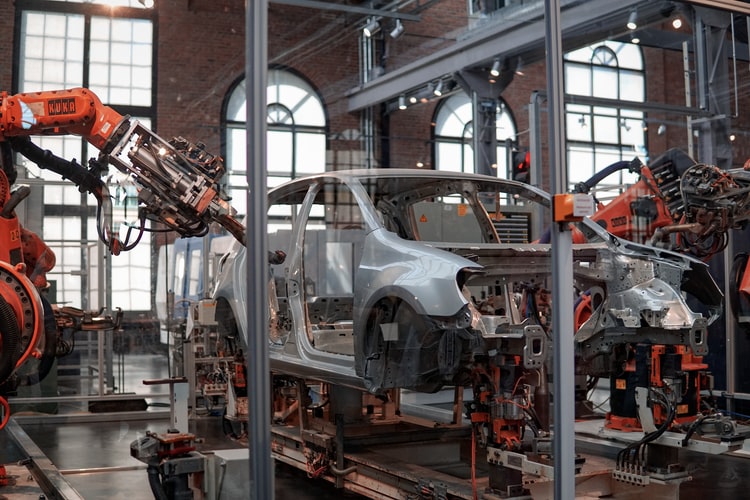
Ever since the first car rolled off of Henry Ford’s new assembly line, manufacturers have looked for ways to increase quantity without losing quality. Industry 4.0 (the industrial internet of things) promises to lead the way with autonomous manufacturing.
The idea of machines that could “talk” to one another became popular in the manufacturing industry around 2015. The skilled workers of the Baby Boomer generation were retiring, and not enough workers in the younger generations wanted to learn a trade. Companies needed to fill that gap, and now, automation is here to stay.
Current Automation Trends
Pretty quickly, larger companies saw the advantages of using robots for assembly work. Such big companies could afford the investment in higher technologies. However, only a small percentage of the manufacturing industry as a whole contains large companies. In fact, more than 75% of US manufacturers employ fewer than 20 people. Such small companies could not (and still may not be able to) afford pricey robots that may or may not help them.
Now, on the heels of an ongoing labor gap and COVID-19 restrictions, small- to medium-sized manufacturers (SMEs) are looking to Industry 4.0 for help.
Industry 4.0 is delivering with advanced robotics. A recent study noted that 34% of manufacturers plan to look into this option immediately.
Bringing together power and automation helps companies plan for sustainable manufacturing. Plants need to line up the amount of power required to operate current equipment with future power needs. Thus, new robotic equipment may be more energy-efficient and more productive.
Finally, SMEs will see an increase in robots that can handle production and material handling. Machine learning and AI allow robots to learn new tasks. While early robots could do one thing, modern robots can pick up an object of any size and place it where it belongs. This skill is valuable on the production line and in the warehouse.
Autonomous Manufacturing Systems
The next step beyond one robot doing one task is an autonomous manufacturing system. It connects individual robots together, gathering data from each one and analyzing it.
This system leads to data-driven company decisions. For example, based on the wear and tear of each robot, the system can schedule maintenance and repair or replacement. These decisions save money. In a system without automation, if a production line fails, the company would lose time and money.
Additionally, since the autonomous system sees all of the running parts at the same time, it can also make more complex decisions. If one robot is cutting one piece of metal an inch short, the system can see and correct that mistake in real time.
In a regular factory, such a small mistake might not be caught until the final product assembly. By then, tons of material and hundreds of man-hours would be wasted. The manufacturer would lose money on the job, and the company may lose the contract.
Pros and Cons of an Autonomous Manufacturing System
Like anything, especially innovations, there are pros and cons.
On the positive side:
• With COVID-19 still in play, an autonomous system allows companies to keep work-from-home plans for many employees. Most departments can hold meetings and work together on projects through secure network connections.
• Manufacturers that include AR (augmented reality) in their system can see any part of the production line. Data about that line appears on the computer screen in real time, and employees can add the visual data with the system’s plant data to see a full picture without stepping foot in the building.
• The system provides plant data and detached analysis of that data. The manufacturer’s finance team can sort production data to decide which lines make the most money. They can pass this information to the marketing team and sales team to push those lines while the less profitable ones are phased out.
On the Negative Side:
• The blend of IT (information technology) and OT (operational technology) increases a manufacturer’s chance of a cyberattack. As more information flows through the plant and externally to remote workers, more attack points open. Sometimes, the attack affects only one facility.(Think of a competitor looking for trade secrets.) Other times, the attack affects an entire community. Such attacks are often on the news as they affect water systems, electric grids and transportation hubs.
• Equipment that was left idle when workers went to work from home has probably missed several software and hardware updates. These gaps leave machines open for attack.
The Role of Software
Software plays an important role for small- and medium-sized manufacturers. These companies are in the early steps of using advanced automation.
SMEs can avoid the lack of communication between first-generation robots as well as dodge the cost of their training. Indeed, modern software can replace costly human programmers. It acts as a cloud layer connecting, training and watching individual machines.
Software-defined manufacturing is cost-effective to scale. It allows everyone in the plant to see the same data set, so everyone - human and machine - can work together to improve manufacturing processes. Finally, it also adds the artificial intelligence and machine learning part of autonomous automation without the high price tag.
Today’s technology won’t turn a 25-person shop into a multi-billion dollar, international powerhouse overnight. By design, it lets SMEs decide how much of the plant to automate. Stages can connect to one another in a way that makes sense for each factory. Software-defined autonomous manufacturing gives SMEs the right tools and the right time to grow and succeed.
Does your company provide automation solutions for manufacturers? IndustrySelect can help you prospect among 400,000 U.S. manufacturers and one million executives in need of your services. Click here to try out a free demo.
Read More: Top Apps and Software for Manufacturers
