

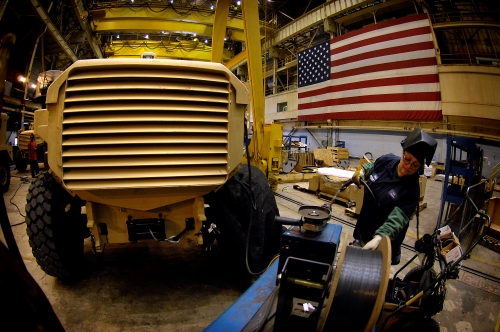
Photo by Cherie A. Thurlby, U.S. Department of Defense, public domain.
The concept of “reshoring” has been around awhile, gaining traction after the Great Recession ended in 2009, but the idea has come into greater focus as the coronavirus pandemic exposed vulnerabilities in the U.S. medical supply chain and upended operations for many U.S. manufacturers with reliance on global supply chains.
This article will explore the evolution of the reshoring movement and the greater relevance it has gained amid the COVID-19 pandemic.
What is Reshoring?
Reshoring refers to a movement within the manufacturing community to move operations and jobs that had been outsourced to foreign nations back to the U.S. The reshoring movement began as a backlash against the precipitous job losses that followed the ratification of the North American Free Trade Agreement (NAFTA) in the mid-1990’s.
Although trade agreements with other nations meant products were cheaper for the American consumer, during this time, the U.S. lost millions of manufacturing jobs to foreign nations, drawing greater public attention to the state of the nation’s industrial sector.
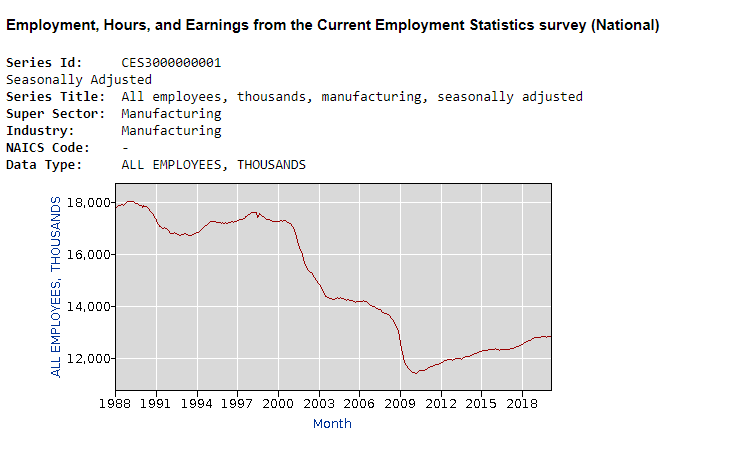
The movement gained traction toward the end of the recession, when an already decimated industrial sector saw the loss of several hundred thousand more jobs.
Organizations like the Reshoring Institute and the Reshoring Initiative emerged, providing resources for U.S. manufacturers to move operations back home.
As labor costs increased in developing nations and shipping costs rose, the reshoring movement became both a patriotic one – and a practicable one. Keeping supply chains local meant having more control over the end product and industrial marketplaces like IndustryNet made it easy to discover new suppliers and request quotes.
By 2013, the movement had achieved notable momentum. The Reshoring Initiative released its Annual Activity and Accomplishment report in that year and found that over a ten-year period measured from 2003-2013 the number of offshored jobs went from approximately 150,000 jobs per year in 2003 to 30,000-50,000 jobs per year in 2013. The “Made In USA” brand went mainstream with domestic producers proudly marketing their products as American-Made.
Yet, many companies continued to offshore. While some industrial companies remained in the U.S., many still found importing vital components and parts from overseas for the manufacture of goods was more cost-effective than having parts made here.
Modern Reshoring
Over the past few years, the re-shoring movement gained additional traction due to the Trump Administration’s overhaul of NAFTA (the USMCA) paired with tariffs slapped on billions worth of goods imported from China. The cost of tariffs, combined with increased wages in developing nations and longer lead times once again had manufacturers rethinking their supply chains.
Many looked to source stateside, yet others simply moved operations to other developing nations not subject to 301-tariffs.
And then, the coronavirus outbreak struck, causing tragedy around the world.
The coronavirus outbreak effected a one-two punch to U.S. manufacturers. As the outbreak took hold in China, thousands of U.S. manufacturers were impacted. U.S. companies with operations in China had to shut down, while those manufacturers that relied on Chinese suppliers for parts and components were out of luck as the nation’s factories shuttered.
Although the lag in Asian supply chains is temporary (the region is slowly getting back to work) it has still put enormous stress on the sector with ripple effects to be felt for months, if not years, to come.
The Institute for Supply Management’s COVID-19 Survey: Impact on Global Supply Chains, released in February, found that a startling 75% of companies were experiencing some form of supply disruption due to the outbreak in China.
When the virus hit the United States, it became alarmingly evident that domestic U.S. manufacturing capabilities were not up to the task of producing the vast amounts of personal protective equipment (PPE) needed to fight the virus and protect health care workers.
These supplies would normally be procured from China – the epicenter of the outbreak. In an inspiring show of force, hundreds of manufacturers began retooling their facilities to produce much-needed PPE supplies. GM started making ventilators. A baseball uniform maker started sewing up hospital gowns in New Jersey. A Pennsylvania candle maker cranked out face shields, while hundreds of distilleries started making hand sanitizer.
The list goes on and is still growing. Yet, a shortage of supplies persists. Adding to this is the related concern that the U.S. is also no longer at the forefront of prescription drug production -- that too has been dominated by China.
All of these factors have led many manufacturers to ask: is it time to consider reshoring? For some, the recent costs of supply disruptions will not ultimately outweigh the benefits of outsourcing, but for other companies, COVID-related delays and confusion were the proverbial straw.
Said one manufacturer in response to an earlier ISM survey: “It’s a mad dash to source stateside.”
In short, the current crisis has had many companies seeking local suppliers due to global supply chain disruptions. Although the crisis appears to be a temporary one, it may play into many manufacturers’ operational decisions going forward, and those already here may be deterred from outsourcing.
Those who do business with manufacturers may see greater demand for new products and services, either from newly re-shored companies or from those seeking to produce parts and supplies domestically rather than relying on global supply chains.
With most manufacturers still operating out of necessity, we’ve seen a 27% increase in category searches on IndustryNet since March of this year, compared to the same period in 2019. Many manufacturers are desperately seeking new/alternative sources of parts, components, and services so they can remain operational even though existing supply chains are drying up.
Top category searches for this period include tools (53,000 searches); chemicals (52,000) and molds (39,000). Total category searches on IndustryNet since March 1st have topped 798,000.
At MNI, we’ve been in close contact with the nation’s manufacturers for more than a century, and continue to track new manufacturers and expansions in the U.S. Our goal is to help your business thrive, so whether you’re looking to advertise your products and services to manufacturers, need to find new supppliers, or are looking to reach out to decision-makers in the manufacturing world, our industrial solutions are here to support your mission.
