

3 MIN. READ
The use of industrial ovens and furnaces in the creation and processing of materials is significant to many different industries.
Automotive, aerospace, foundries, food processing, laboratories, pharmaceuticals and materials industries are all customers of this sector.
The sector represents a small fraction of the total manufacturing industry. According to MNI, publisher and compiler of the industrial data that powers IndustryNet, While only 427 businesses identify as manufacturers in this sector, they contribute over $2 billion in sales to the national economy.
Purpose and Use Cases
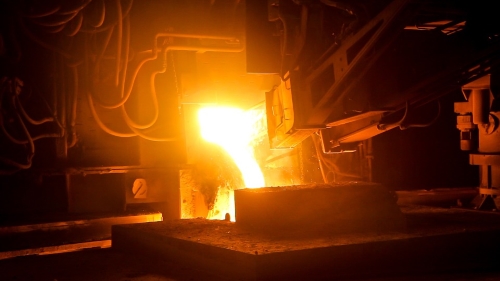
Industrial ovens and furnaces are used for a variety of processes including curing, annealing, baking, homogenizing, sterilizing, bonding and tempering.
Depending on the type of materials being treated, they can run in either a batch or a continuous conveyor process. Heating is accomplished by burning natural gas, fuel oil or coal or using electricity.
Industrial Ovens vs. Furnaces
Industrial ovens are slowly gaining market dominance over industrial furnaces for materials that do not require extra heat or a sealed chamber.
They are used extensively in the tempering of metals and the production of glass. Typically, these ovens tend to work at lower temperatures than industrial furnaces, at roughly 1000 degrees or less.
Furnaces are still used for high-temperature work and materials that require a closed system.
Global Factors Affecting Sales
Industrial ovens and furnaces feature a very high international distribution ratio despite their relatively small market share of the manufacturing industry.
Based on data collected by MNI, international distribution for this sector is 69%, compared with only 29% for manufacturing overall.
The spread of industrialization throughout the Pacific Rim has helped drive the need for industrial ovens and furnaces.
This region is also primed to help boost demand in the coming years as steel production recovers in China and India specifically.
The trade war with China has impacted the previously robust growth of this sector. While no companies reported a decline in sales, only 3% reported sales growth. Even more indicative of confusing economic conditions is the data on sector employment.
Based on figures researched by MNI, 5% of companies reported a decline in employees. However, 5% of companies also reported an increase in employees.
Sector Characteristics
Overall, the sector increased total employment by 0.72% for a total of 17,139 individuals, reports MNI. Total sales also remained fairly stagnant, with a minor 0.85% increase over the past year.
This equates to just over $2.2 billion in current sales. This moderation of sales has not stopped innovation. Manufacturers are embracing automated systems that reduce or eliminate the need for human operators.
This provides better quality with repeatable results, an important factor for industries that require precise control over their processes.
Manufacturer Locations
Industrial ovens and furnaces are built all over the United States as evidenced by geographic distribution data. According to MNI, the majority of these firms reside in the Midwest; 165 businesses, 39% of the entire sector, are located here.
The Northeast and South are fairly close in population with 27% and 22% respectively. Finally, the West is home to just 54 companies, or just over 12% of the sector.
Looking for Industrial Oven or Furnace Manufacturers?
IndustryNet is an industrial marketplace that provides detailed information on 400,000 U.S. manufacturers and suppliers of more than 10,000 parts and services. Request quotes, get in contact with key personnel or simply see where providers are located. Expert researchers work to provide the most up-to-date information.
IndustryNet also provides sellers with marketing solutions that help them stand out in a competitive market.
