

 U.S. manufacturing started out 2019 strong, with the ISM reporting a rebound in industrial activity in January, and U.S. industrial output posting its largest increase in ten months, as reported by the Federal Reserve.
But, as we head into the second quarter of 2019, manufacturing appears to have stalled a little, with the ISM’s manufacturing activity index easing back in February and the Federal Reserve reporting a slight decline in industrial output, and a sharp spike in the trade deficit. Even hiring, which has seen record gains over the past year in manufacturing, eased slightly in February.
Related: How serious is the trade deficit? Five things to know.
A number of factors are impacting the nation’s industrial sector at the moment, including fallout from of the government shutdown and uncertainty over tariffs. Yet, despite all of this, U.S. manufacturing is still growing, with new plants and expansions announced each day.
From Kenosha, WI to Victoria, Texas here are just a few of the major manufacturer announcements made in March.
New manufacturing plants and expansions announced in March
Biotech takes flight in North Carolina with new Bluebird Bio facility
Just this week, North Carolina governor Roy Cooper cut the ribbon for Bluebird Bio’s new cutting-edge gene and cell therapy manufacturing plant in Durham. The new facility will employ state-of-the-art manufacturing processes to produce lentiviral vectors used in gene and cell therapies that are used to help treat a variety of illnesses.
According to Bluebird’s announcement, vectors are genetically modified components of viruses that are utilized for transporting new genes into cells without causing disease.
The 125,000 square foot, $80 million plant currently employs 50 workers, and has plans to hire 20 additional workers before the end of the year, including scientists, engineers, and manufacturing personnel.
“North Carolina is proud to bring Bluebird Bio’s cutting-edge work to Durham,” said Governor Roy Cooper at the ribbon cutting. “Bluebird is developing treatments for devastating diseases that could change the course of medicine. And, with the Triangle’s highly-skilled workforce, it will continue to be a leader in the biotech field.”
North Carolina’s Research Triangle Park has emerged over the past decade as a hotspot for innovation and advanced manufacturing, and the state overall has seen impressive growth in its manufacturing sector as a result.
Diverless technology steers toward Michigan
This month brought a flurry of major new announcements for the state of Michigan, with the state’s auto industry leading the way.
First off, we saw Ford make a big announcement last week of its plans to establish a new facility in Michigan dedicated to the production of self-driving vehicles.
This comes after Waymo, the up-and-coming autonomous vehicle company owned by Alphabet (the holding company for Google businesses) announced in January that it would be setting up a self-driving factory in Michigan.
Ford has been investing heavily in electric vehicle and driverless technology, and just recently also announced it would be adding 900 jobs over four years at its Flat Rock assembly plant near Detroit. This investment will go toward the production of electric vehicles by 2023.
GM also announced plans to invest in its Orion assembly plant, where it will assembly a new electric vehicle. The $300 million investment will add 400 to the state.
This follows GM’s earlier closure of the storied Lordstown, Ohio factory. Some have speculated that GM’s Orion plans were a direct result of criticism of the Trump administration for the Lordstown closure, though it appears the USMCA had more to do with it.
According to GM’s statement, the company decided to go forward with the Orion investment partially due to the new trade agreement USMCA, which makes it more beneficial to manufacture in the U.S. given the more restrictive rules of origin provision in the new treaty.
Related: Goodbye NAFTA, hello USMCA: What the new trade deal means for U.S. manufacturers
In the same statement, it also restated its plans to invest $1.8 billion in U.S. plants over the next several years. The company has invested more than $22 billion in U.S. operations since 2009.
“We are excited to bring these jobs and this investment to the U.S.,” said GM Chairman and CEO Mary Barra
Finally, South-Korea-based auto supplier Erae AMS USA Manufacturing, LLC unveiled plans to break ground on a facility in Pontiac, with plans to hire 137 and invest $17 million.
Related: A closer look at Michigan’s manufacturing outlook
Electrical equipment maker jolts production with Mississippi expansion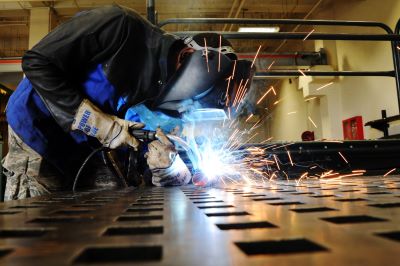
Looking elsewhere, a number of new plants and expansions were announced in March, including ABB’s plans to expand its operations in Senatobia.
ABB will add 200,000 square feet to existing manufacturing space where it makes electrical equipment and supplies. The new facility will add 300 new jobs and represents an investment of $36 million.
Gasket company seals the deal in Tennessee
Also in March, the Hubner Manufacturing Corporation announced that it plans to establish a new facility in Dunlap, Tennessee.
Hubner, which makes components for the transportation industry, plans to produce extruded parts, gasket and seals at the 36,000- square foot plant. The $9.6 million investment will bring an estimated 66 jobs to the region.
Manufacturing victory in Victoria, TX
For four years, a building formerly occupied by Victoria Machine Works in Victoria, Texas, sat unoccupied. That is, until Tejas Production Services worked with local officials to set up operations at the facility.
Tejas, which makes oilfield equipment, plans to employ 80 at the new plant by 2020, and will work with a local college to train and hire new employees.
Oilfield supplier bets big in Baton Rouge
Another oil industry supplier, Stupp Corp., announced a major $22 million expansion at its facility in Baton Rouge.
Stupp, which has been operating in Baton Rouge for 70 years and supplies oilfields with steel pipes, plans to hire an additional 128 workers at the Baton Rouge plant, and retain 338 existing positions.
Pet food ingredient maker finds its niche in Nebraska
The town of Seward, Nebraska received some good news last week when Scoular Co. announced it would be establishing a new pet food ingredient manufacturing plant in the region.
The $50 million, 105,000-square-foot plant will focus on producing freeze-dried proteins for pet foods and plans to hire roughly 100 workers.
Related: Top resources for finding skilled manufacturing workers
Foxconn finds its footing in Wisconsin
When Chinese electronics giant Foxconn announced plans in 2017 to establish an LCD panel factory in Wisconsin, The White House and Wisconsin officials were overjoyed. "This is a great day for American workers and manufacturers and everyone who believes in the concept and the label 'Made in the USA,' " said President Donald Trump.
Foxconn’s initial plan was to hire 13,000 manufacturing workers at the massive facility outside Kenosha, bringing an annual average wage of $53,875.
But the company suddenly seemed to reverse course at the start of the year, with Reuters reporting that Foxconn would be using the facility for R&D, staffing it with scientists and engineers, not manufacturing workers.
But then, on February 1st, Foxconn mysteriously recommitted to the Kenosha plant and the original goal of 13,000 manufacturing jobs, citing “productive discussions” with the Trump administration.
And just last week, the electronics giant announced it would begin construction at the Kenosha site this summer, and has projected that it will start up production in the fourth quarter of 2020.
The new plant will produce Generation 6 LCD screens.
Related: Inside Wisconsin’s manufacturing boom
Finding domestic suppliers
As U.S. manufacturing grows and changes, IndustryNet continually updates information on over 400,000 U.S. manufacturers and suppliers of more than 10,000 products and services. IndustryNet lists suppliers across a range of industries, producing everything from steel and aluminum to air compressors, conveyor belts and printed circuit boards.
Visitors can set up a free user account, build custom lists of potential suppliers, send quote requests, download catalogs, view company photo and video libraries, and more.
IndustryNet is also a direct path for U.S manufacturers to increase their visibility among domestic industrial procurers. Learn more about our marketing solutions.
