

According to new data collected by MNI, publisher of the industrial data that powers IndustryNet, manufacturing employment in North Carolina climbed over the past year, with the state adding nearly 5,000 jobs -- its eighth straight year of gains.
Although the state’s steady growth is welcome news, it is worth noting that 2018’s gain fell slightly short of the 9,000 jobs gained in 2017. For the first time in several years, transportation equipment did not lead the state’s gains. Growth in the auto industry has slowed, both in North Carolina and across the nation.
North Carolina has added more than 33,000 jobs since the end of the recession, recovering about 35% of jobs lost during the downturn.
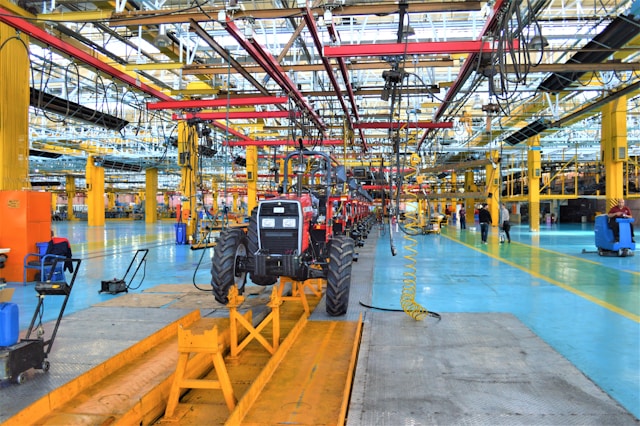
Transportation equipment, which has led North Carolina’s manufacturing job growth in recent years, posted an employment increase of just one half of one percent. North Carolina’s transportation equipment sector had driven the state’s manufacturing gains in the post-recession era, with the sector’s workforce growing by 18% since 2012.
Instead, 2018 gains were overwhelmingly led by food processing as well as steady, smaller gains across a spectrum of industries.
North Carolina Manufacturing: The Year in Review
Industrial companies in North Carolina added 4,871 jobs in 2018, a 1% gain.
Employment gains were led by a 6.5% increase in food processing, which ranks first in the state for number of industrial jobs, employing 65,464.
Industrial machinery, which ranks second in the state with 64,246 jobs, also posted a gain, up 1.7%.
Other manufacturing sectors in North Carolina adding jobs included rubber/plastics (+4%); stone/clay/glass (+3.3%); lumber/wood (+1.4%); and chemicals (+1%).
North Carolina manufacturing job losses were seen in printing/publishing (-4.6%); primary metals (-4.5%); and furniture/fixtures (-3.5%)
Taking a look at regional data, MNI reports the Northwest of the state accounts for the latest share of North Carolina’s manufacturing employment, employing 43% of its workforce. 26% of North Carolina manufacturing workers are based in the Northeast of the state, and 20% in the Southwest. North Carolina’s southeast region accounts for 11% of the state’s jobs.
Most of North Carolina’s major urban centers fared well over the year, with significant gains recorded for Durham and Winston-Salem.
Charlotte accounts for the most manufacturing employment in the state, with 45,418 workers, virtually unchanged from a year ago.
Winston-Salem’s manufacturing workforce grew by 4.8%, now numbering 15,390 workers. Durham added 4% to its workforce. Jobs were virtually unchanged in Greensboro and Research Triangle Park, employing 27,611 and 15,259, respectively.
Raleigh was one of the few North Carolina cities to lose industrial jobs, with employment down 3% to 13,605 workers.
Looking Ahead
Although steel and aluminum make up less than 1% of the state’s total imports, the impact of the tariffs enacted by the Trump administration, now nearly a year old, may nonetheless influence outlook in the years ahead. 173,000 North Carolina factory workers are employed by companies that rely on imported steel and aluminum, according to a MarketWatch study.
2018 was a rocky year for many manufacturers, despite sustained growth in the sector, as a great deal of uncertainty surrounded the tariff issue.
The potential for retaliatory trade measures continues to be been a concern among North Carolina manufacturers. The state’s pork producers are especially impacted as China continues to enact new tariffs on American goods such as pork and fruit.
At the same time, North Carolina’s steel producers should benefit from the new tariffs, as more companies begin to source domestic steel. Charlotte-based Nucor Steel, for instance, applauded the administration’s move to stem the flow of “steel dumping” in the U.S. market.
In March, North Carolina governor Roy Cooper cut the ribbon for Bluebird Bio’s new advanced cell therapy production facility in Durham. The new plant will use cutting-edge processes to produce lentiviral vectors used in gene and cell therapies.
In addition, JBB Packaging, LLC announced plans to establish a $11 million plastic film plant in Weldon. India-based pharmaceutical company Glenmark announced established its first U.S.-based manufacturing facility in Monroe, investing $100 million.
Meanwhile, a big announcement was made in October by Poly-Wood, LLC, laying out plans to open a outdoor furniture manufacturing facility in Roxboro that will eventually employ 350.
Recently, poultry processor Montaire Farms broke ground on a $170 million poultry plant in Siler City in April. The new facility will employ 1,250. Meanwhile, China-based Jushi is in the process of establishing a significant presence in Richland County, building a 800,000 square-foot fiberglass manufacturing facility – the largest plant in the county.
Why North Carolina?
A Forbes 2017 Best States for Business report ranked North Carolina as the #1 state in the U.S. state for business.
North Carolina’s reasonable business costs is considered among the main reasons for this coveted status. A highly-educated workforce and top-notch business incentives have helped as well, bringing more high-tech manufacturers and start-ups to the state.
Research Triangle Park, for instance, is considered among the nation’s top innovation hubs. Much of North Carolina’s innovation and high-tech manufacturing operations have been pioneered at RTP, the largest research area in the United States. RTP is surrounded by three universities and is home to more than 100 high-tech research companies, innovators in everything from pharmaceuticals to electronics.
North Carolina’s strong emphasis on tech-based enterprises has helped the state’s sixth-place ranking for technology and innovation in the U.S. Its pro-business climate has been emphasized by a number of similar studies. Among these are a top ranking for state competitiveness by Site Selection, and first for lowest state and local business tax burden by Ernst & Young.
North Carolina manufacturers can also take advantage of a number of top notch incentives such as the One North Carolina Fund, Job Development Investment Grants; and County Development Tier Designations. Capital funding and shovel-ready sites are also in abundance.
To get an in-depth look at growth in North Carolina's manufacturing sector since the end of the recession, read our post: A Closer Look At North Carolina's Manufacturing Boom.
North Carolina Manufacturing: By the Numbers
Top North Carolina Manufacturing Sectors by Employment:
11% Industrial machinery and equipment
11% Food processing
8% Transportation equipment
8% Chemicals and allied products
7% Rubber and miscellaneous plastic products
Largest North Carolina Manufacturers by Employees:
IBM Corp. (Research Triangle Park) - 8,000 jobs
SAS Institute, Inc. (Cary) - 5,599 jobs
Smithfield Foods (Tar Heel) - 5,000 jobs
Lowes Cos., Inc. (Mooresville) - 3,500 jobs
Fleet Readiness Center East (Cherry Point) - 3,400 jobs
North Carolina Counties with the Most Manufacturing Jobs:
Mecklenburg - 65,649
Guilford - 53,149
Wake - 45,774
Catawba - 31,037
Durham - 30,295
North Carolina Cities with the Most Manufacturing Jobs:
Charlotte - 54,318
Greensboro - 30,693
Raleigh - 17,735
Winston-Salem - 16,088
Research Triangle Park - 15,259
About This Data:
Information on North Carolina was collected by MNI, the nation's largest and oldest compiler and publisher of U.S. manufacturing data. MNI’s team of more than 80 researchers scours hundreds of sources on-and-offline to zero in on every manufacturer in the U.S.
Each manufacturer is contacted multiple times annually to ensure its information remains up-to-date and complete. Our state-by-state industrial employment surveys are based on this data, allowing us to compare jobs counts in a given industry, state, region or city from year to year.
For More Information on North Carolina Manufacturing Companies
To access detailed profiles of North Carolina’s 10,000 industrial companies and their 33,000 executives, learn more about MNI's IndustrySelect database subscription.
Or, to connect with industrial suppliers in North Carolina and across the U.S. start your free search on IndustryNet. IndustryNet allows users to search and source more than ten thousand types of products, parts, supplies, and services for free. IndustryNet® lists every U.S. manufacturer plus thousands of wholesalers & distributors and industrial service providers.
