

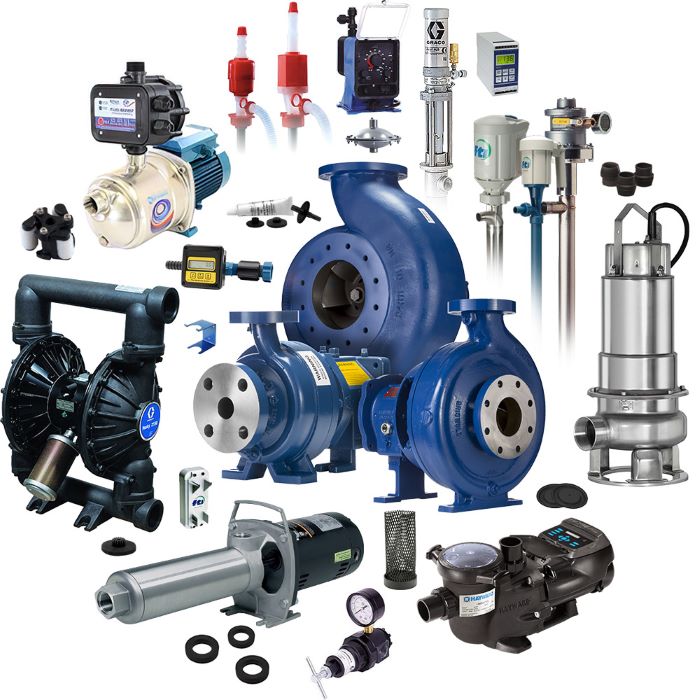
Pump technology is constantly evolving, from centrifugal and diaphragm pumps to drum and hand pumps and everything in between. These changes are happening based on the development of new trends related to efficiency, smart technology, power sources, and much more.
One of the biggest trends currently happening with pump technology is a shift from traditional AOD pumps to EOD pumps. While there are several reasons why this shift is happening, it's largely because EOD pumps have a lower operating cost and offer more precision when constant pumping is required.
However, operating costs and pumping precision are only the tip of the iceberg when it comes to the reason for the shift from AOD to EOD. This article will delve deeper into why exactly this shift is happening and what the future holds for diaphragm pumps.
The Difference Between AOD and EOD
Let's review the main differences between AOD and EOD pumps. This will help us better understand why people are transitioning from AOD to EOD pumps.
While both AOD and EOD pumps are types of positive displacement diaphragm pumps that operate using reciprocal action, they differ in several ways.
What are AOD Pumps?
AOD stands for air-operated diaphragm and refers to diaphragm pumps that operate using compressed air rather than electricity. Compressed air drives the diaphragms inside the pump, shifting them from one internal chamber to another.
This constant airflow and pressure forces liquids to enter through the inlet check valve and exit through the outlet check valve. The air generates power for the pump, and no external power source is necessary.
For years, AOD pumps have been the most popular type of diaphragm and double diaphragm pump. The main reason for this is that AOD pumps are:
• Self-priming
• Run with variable flow rates
• Can run dry or submerged
• Can pump a wide range of fluids and solids
However, the biggest advantage of AOD pumps has always been their ability to operate anywhere. Because they don't need an external power source, they can operate in areas where electricity is inaccessible.
What are EOD Pumps?
Electric-operated diaphragm pumps, better known simply as EOD pumps, are diaphragm pumps powered by electricity. These types of pumps utilize internal motors to create positive displacement and reciprocation. These forces create a vacuum and generate the suction necessary to force liquids and solids from one place to another.
While EOD pumps operate very similarly to AOD pumps in a lot of ways, they have one major difference in addition to their power source. EOD pumps are more complex in design and come with a built-in surge suppression feature. As such, they can withstand back pressure and are more durable and robust in their abilities.
Common Applications of AOD and EOD Pumps
Both EOD and AOD pumps are used in a wide range of industrial settings and applications. The most common applications for AOD pumps include:
• Chemical Processing Applications - AOD pumps are perfect for situations where they are transferring corrosive chemicals. They don't have any internal or external electrical components and can run dry, and they can also transfer semi-solids. As such, they are used to pump chemicals including acids, solvents, paints, stains, and more.
• Mining and Agriculture - AOD pumps are ideal for use in mining and agriculture for many of the same reasons they're ideal for chemical processing. They don't have electrical components prone to damage and they can transfer a wide range of solids and liquids and can operate dry.
• Food and Beverage - AOD pumps are also a good option for operations in the food and beverage industry. They are designed with clean and hygienic components and can transfer liquids, solids, and sticky substances like syrups and sauces.
However, while AOD pumps used to be considered the best option for each of these purposes, those days are gone. EOD pumps are now more than capable of handling these jobs. Additionally, there are other applications where EOD pumps are the only option, as AOD pumps simply aren't capable of getting the job done. Those situations include:
• Precision pumping situations where you need perfect and consistent flow.
• Situations where you require constant pump operation.
• Situations where you require precise variable flow rate.
.jpg)
Reasons for the Shift From AOD to EOD Pumps
Now that you know several instances where EOD pumps are superior and necessary as opposed to AOD pumps, let's look at why more and more people are switching to EOD pumps.
Lower Operating Costs
The biggest reason for the switch from AOD to EOD is because electric-operated diaphragm pumps have a lower overall operating costs. Because they use electricity as opposed to compressed air, EOD pumps are much more efficient than their air-driven counterparts. In fact, some double-diaphragm EOD pumps use up to 80% less energy than AODD pumps!
Better Precision
The second main reason that EOD pumps are becoming more popular than AOD pumps is because of their precision. The constant flow of electricity means that the motors driving an EOD pump are consistent and accurate. This makes them preferable in certain industries where precision is a must-have, such as in wastewater treatment, pharmaceuticals, and other metering applications.
Continuous Operation
As long as an EOD pump has an electrical connection running to it, it will operate until you deactivate it. This feature makes EOD pumps preferable in the HVAC, plumbing, water treatment, agricultural, and automotive industries, where even a moment of pump deactivation or inconsistency can be disastrous.
Specific Applications
Lastly, EOD pumps work better in systems where automation and integration with other technologies is required. EOD pumps are simply more compatible with modern control systems and smart technologies, which is becoming more and more important, thanks to the continued rise of AI and other smart technology.
How Harrington Can Help You Remain on the Right Side of Pump Technology
Understanding new pump technologies and trends is difficult, which is why it's good to have a pump expert on your side, like Harrington Process Solutions. Harrington is joining the massive shift from AOD to EOD pumps and offers the best electric-driven pumps in the industry. Their team of experts is leading the charge when it comes to new pump technologies and they can help you decide which EOD pump is right for you. Give them a call today!
Author Bio:
Kevin Maple is the Director of Marketing at Harrington Process Solutions, a national distributor & supplier of industrial process products & solutions. Kevin has been a critical part of the Harrington team for over a quarter-century, providing marketing strategy within the industrial industry. Kevin has in-depth knowledge and understanding of piping, fluid handling, instrumentation and high-purity applications.
