

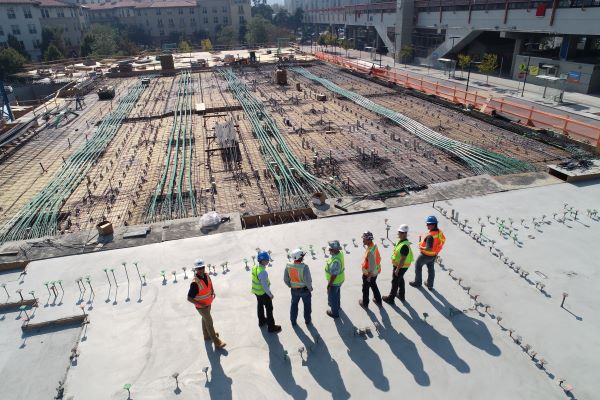
On March 31st, the Biden Administration unveiled the American Jobs Plan, a massive $2 trillion infrastructure plan aimed at rebuilding the nation’s aging infrastructure, renewing the electrical grid, investing in EV production and jump-starting U.S. manufacturing. Notably, a statement released by the White House explicitly mentions outcompeting China as a key component of the plan.
This follows Biden’s executive order on strengthening domestic supply chains, with a view towards examining vulnerabilities and securing U.S. access to supplies in industries especially hard hit by the pandemic.
The plan runs alongside the Made in America Tax Plan, which is expected to help fund the massive infrastructure plan. Today, we’re going to take a closer look at what’s in the proposed American Jobs Plan and Made in America Tax plan and their potential impact on U.S. manufacturers.
What’s in the American Jobs Plan?
According to a statement issued by the White House, the American Jobs Plan is “an investment in America that will create millions of good jobs, rebuild our country’s infrastructure, and position the United States to outcompete China.” The U.S., despite being the wealthiest country in the U.S., also ranks 13th in the nation when it comes to infrastructure quality, according to the statement. The new plan aims to revitalize America's aging infrastructure. Specfic items from the plan include:
• Fix highways, rebuild bridges, upgrade ports, airports and transit systems. The plan calls for modernizing 20,000 miles of highways and roads and repairing 10,000 bridges.
• Deliver clean drinking water, renewed electrical grid, and high-speed broadband. This involves replacing all lead pipes, capping orphan oil and gas wells, and laying thousands of miles of transmission lines.
• Build, preserve and retrofit millions of homes and buildings. This includes hospitals, federal buildings, schools and commercial buildings.
• Revitalize manufacturing, invest in R&D and job training, and secure U.S. supply chains.
What’s in the Made in America Tax Plan?
The infrastructure plan is expected to cost upwards of $2 trillion, to be spent over the course of eight years. Meanwhile, the Treasury Department released the Made in America Tax plan, which aims to collect sufficient revenue to fund critical investments and infrastructure.
The plan calls for raising the corporate income tax rate from its current 21% to 28% over the course of 15 years and reversing tax-based incentives for moving productions overseas.
The tax plan would also eliminate the tax exemption for the first 10% return on foreign assets. Additionally, the GILTI minimum tax, which is tax on income earned abroad by U.S.-controlled foreign corporations, would be calculated on a per-country basis and the minimum tax would be raised to 21%, from its current 10.5%-13.5%. Other items from the plan include:
• Ending the “race to the bottom” The plan also seeks to end the global “race to the bottom,” referring to countries competing for multinationals’ business by lowering the corporate tax rate. The new plan seeks global agreement for a minimum corporate tax rate in order to level the playing field between foreign and U.S. companies.
• Requiring all corporations to pay their fair share. This involves imposing a minimum tax on companies with large discrepancies between income reported to shareholders and income reported to the IRS.
• Building a fairer tax system that rewards labor. This seeks to increase the labor share of national income.
• Boosting alternative energy investments This component seeks to end subsidies for fossil fuel industries and promote “green” technology and initiatives such as electric vehicles, solar and wind power.
Impact on Manufacturers
The impact of the plan on U.S. manufacturers is significant, and may represent a boon for the following industries:
• Workforce development. Manufacturers have long been grappling with a persistent shortage of skilled labor, with the “skills gap” growing wider as manufacturing processes become more and more advanced. The new infrastructure plan seeks to close this gap with $100 billion in investments for workforce development programs.
• Boost for EV market: With the current proposal, $174 billion would be poured into electric vehicle market. EV makers, battery manufacturers and related suppliers are expected to benefit greatly from the plan.
Related: 4 Essential Recruitment Strategies for Manufacturers
• Boost to manufacturers that support the construction industry. Construction-related manufacturers are likely to benefit directly from the infrastructure plan, including manufacturers of road graders, dump trucks, bulldozers, cranes, power generators, and companies that produce construction materials such as concrete, asphalt and steel are likely to benefit directly from the infrastructure plan.
• More R & D Investment to Boost Semiconductors, Electronics, Biotechnology. One key component of the plan is to reverse the decadelong decline in the nation’s R&D spending. The new infrastructure plan calls for $30 billion to upgrade research labs in federal and university settings and $50 billion for semiconductor research and manufacturing. It also seeks $50 billion for the National Science Foundation, focusing on semiconductors, advanced computing, advanced communications technology and biotechnology.
• Supply Chain Monitoring The new proposal also includes $50 billion for funding a new office within the Department of Commerce that would “monitor domestic industrial capacity and funding investments to support production of critical goods.” This may alleviate some of the supply chain disruptions that continue to plague U.S. manufacturers amid the pandemic.
What Business Leaders Are Saying About the Plan
Many business groups have voiced their support for the idea of a comprehensive infrastructure bill, but at the same time object to raising the corporate income tax to pay it.
Prior to the Trump administration’s massive tax overhaul, the corporate tax rate stood at 35%. The Trump plan brought that rate down to 21%, but the new plan seeks to increase that rate to 28%. The National Association of Manufacturers credits the Trump tax cuts with creating hundreds of thousands of new manufacturing jobs in the years that followed.
NAM president and CEO Jay Timmons said in a statement. “Raising taxes on manufacturers would fundamentally undermine our ability to lead this recovery, Though noting that the manufacturing industry group “believe[s] strongly in bold infrastructure investment,” Timmons said the corporate tax hikes would “turn back the clock to the archaic tax policies that gave other countries an advantage over America.”
Meanwhile, the U.S. Chamber of Commerce, which had previously called for a comprehensive infrastructure plan, also balked at the proposed tax increase. Said Neil Bradley, president and chief policy officer for the Chamber, “We need a big and bold program to modernize our nation’s crumbling infrastructure and we applaud the Biden administration for making infrastructure a top priority. However, we believe the proposal is dangerously misguided when it comes to how to pay for infrastructure.”
Sources:
https://www.investopedia.com/global-intangible-low-taxed-income-gilti-definition-5097113
https://tax.thomsonreuters.com/news/treasury-department-reports-on-president-bidens-made-in-america-tax-plan/
https://www.investopedia.com/global-intangible-low-taxed-income-gilti-definition-5097113
https://home.treasury.gov/news/featured-stories/made-in-america-tax-plan-report
https://fortune.com/2021/03/31/biden-infrastructure-plan-corporate-tax-increases-business-groups/
https://www.uschamber.com/press-release/us-chamber-calls-productive-solutions-democrats-and-republicans-enact-infrastructure
