

You've heard of nickel and titanium, but have you heard of nitinol and tantalum? Today, the experts at Ulbrich Stainless Steels & Special Metals, Inc., a fourth-generation family owned and operated precision re-roller and distributor of stainless steels and special metals, is providing a fascinating overview of some unusual metals and their myriad applications.
Nitinol
Nitinol, an alloy of nickel and titanium, is a relatively recently formulated metal that takes its name both from its composition and the place where it was produced (Nickel Titanium –Naval Ordnance Laboratory). Although it was discovered in the early 1960s it took decades for Nitinol to become useful in the marketplace due to the difficulties encountered in its processing and manufacturing.
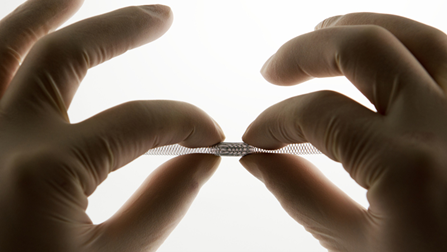
This alloy has shape memory properties, which means it can change to a new form at one temperature – lower than at normal body temperature for instance – and then recover its original shape upon being heated beyond its transformation temperature. Its adaptability and compatibility with the human body makes it useful for numerous applications in the medical field. At higher temperatures, Nitinol assumes a cubic crystal structure referred to as austenite, or the parent phase. At lower temperatures, it spontaneously transforms to a more complicated ‘monoclinic’ crystal structure known as martensite. The temperature at which austenite transforms to martensite is generally referred to as the transformation temperature. The shape memory and superelastic properties allow Nitinol to exhibit a reversible response to an applied stress which itself is caused by a phase transformation between the austenitic and martensitic phases of a crystal.
Crucial to Nitinol’s properties are two key aspects of this phase transformation. First is that the transformation is ‘reversible’, meaning that heating above the transformation temperature will revert the crystal structure to the simpler austenite phase. The second key point is that the transformation in both directions is instantaneous. Martensite's crystal structure has the unique ability to undergo limited deformation substantially without breaking atomic bonds. This type of deformation is known as twinning. Heating returns the original austenitic structure.
Given its recent emergence in the manufacturing world, it is clear that the surface of Nitinol's future uses has barely been scratched.
Tantalum
Tantalum — a shiny, versatile, silver metal has numerous uses in modern industries ranging from high-temperature applications to electrical devices and medical applications. It has long been used in the manufacture of capacitors, but more recently it also has been found to be a desirable element in shaped wire applications. Its extraordinary corrosion resistance makes it uniquely attractive for medical implants ensuring reliability in devices that can enhance human life. This ability also allows for ideal for use in acid-rich environments.
Tantalum capacitors are used in medical devices such as hearing aids and pacemakers. The metal is used in capacitors in automobile computer circuitry to regulate not only basic functions such as engine control and airbag deployments but is also currently found in anti-lock braking systems and global positioning systems.
Tantalum has emerged as a preferred metal for electronic uses, even replacing platinum, since it can withstand very high heat in a vacuum and is relatively low cost. Electronics manufacturers have been able to significantly reduce the size and cost of numerous electronic devices such as cell phones while simultaneously increasing their range of functions, partly through the use of compacted tantalum powder in capacitors. Other electronics with tantalum capacitors include digital and video cameras, video games, and laptop computers. The metal’s capacitors are preferred in many electronic uses because they are more efficient than capacitors made from other materials; have excellent power dissipation characteristics; are highly reliable and have an unlimited shelf life.
Nonetheless, there are many other forms of tantalum in use in modern industry, and if handled properly, it has myriad applications and is entirely safe. These forms include tantalum carbide, tantalum oxide, and tantalum sheets, plates, rods, and wires. Tantalum carbide is used in cutting tools. You may, for example, read articles and e-mails printed from your computer on paper with the use of an ink-jet printer. Moreover, tantalum oxide is used in camera lenses and even X-ray film.
In short, it is a go-to metal with an incredible range of applications in an equally wide range of forms. The development of tantalum applications is keeping pace with advancing technology and its development should continue as technology progresses.
Titanium
Titanium is one of the most versatile metals in modern use. Not only can it be eaten and digested – in small amounts in some forms – its uses include components for buildings, aircraft, bridges, and even medical implants, with many other functions in between. In fact, only five percent of the titanium mined worldwide is used in its metallic form. Nonetheless, titanium bears the brunt of the demand for a strong, yet lightweight metal that is corrosion-resistant, particularly to bodily fluids, enabling its use in medical applications.
When titanium is used for medical devices and implants it presents less risk of rejection by the human body than many other metals. When this is combined with other essential properties titanium becomes a preferred metal for internal medical uses including joint replacement, as well as heart and back surgery implants. For internal medicine applications, titanium can be found in shielding for pacemakers and for a wide range of other implanted devices including those that regulate the heart or regulate the internal release of pharmaceuticals.
It’s also used in numerous devices such as pins and screws that attach the implants to the body. Titanium's relatively lightweight strength, durability, and totally non-magnetic properties have provided another niche in the medical instrument industry for tools ranging from retractors, forceps, and even drills to highly technical equipment such as MRIs.
We process precision titanium strip and foil for medical implants, shields/cans for pacemakers, defibrillators, and an increasing array of neuro-stimulator devices as well as the batteries and capacitors that power those devices.
Chemical processing industries use titanium foils for structured packing in distillation columns, specifically for terephthalic acid production, as well as gaskets and seals in the process. Other applications for titanium foils from Ulbrich include the production of hydrogen in hydrolyzers from water; foils for the production of structural honeycomb used in aerostructures; and foils for the production of composite materials used in aerostructures.
Titanium's corrosion resistance properties provide not only the perfect material for major construction projects that will often be exposed to the elements but also for minuscule applications within the human body that will be exposed to different but equally corrosive elements. Among the more common titanium alloys that are found in medical devices are commercially pure Grades One, Two, Four, TI 3%Al/2.5%V, GRADE9, AND 6AL4V and 6AL4V ELI, made from 6% aluminum and 4% vanadium, which are prized because of their non-invasive properties.
One of the most appealing aspects of titanium as opposed to other structural metals is that it can be as strong as steel but weighs only about half as much. In the same vein, it is slightly heavier than aluminum but twice as strong. Titanium is indeed one of the most versatile metals on the Periodic Chart of the Elements.
About Ulbrich
Ulbrich Stainless Steels & Special Metals, Inc., is a fourth-generation family owned and operated business with 11 locations in five countries across North America, Asia and Europe. As a precision re-roller and distributor of stainless steels and special metals, Ulbrich is a capability-driven company, offering a wide range of products and solutions across multiple industries such as medical, automotive, aerospace, electronics, power generation, industrial, oil & gas, consumer, and solar. With nearly a century of experience, the company has the knowledge and capabilities necessary to fulfill the material requirements for your demanding applications.
These new endeavors celebrate and demonstrate the strong, long-term commitment of the Ulbrich Family to the company, their employees, customers, community and other key stakeholders.
Learn more at www.ulbrich.com.
